Turn Marketing Into a Growth Engine
Over twenty years of building B2B global brands and leading global marketing teams at companies like Oracle, OpenText, TeamViewer, Amdocs and AMS, now working with founders, CEOs and advisory boards to lead AI marketing transformation, and marketing initiatives fractionally.
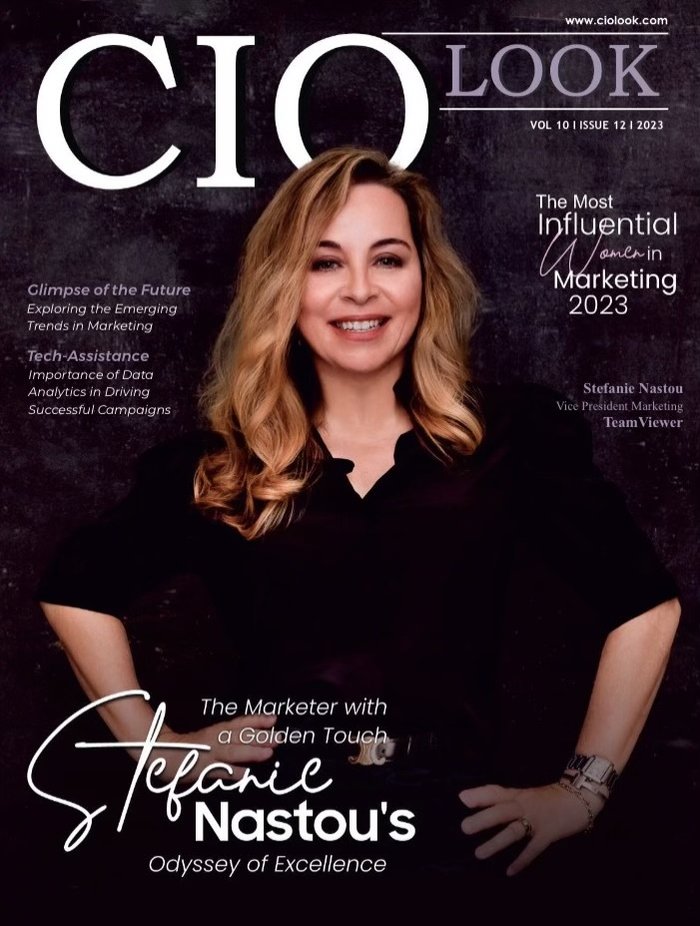
Year-over-year results delivered as CMO of a global talent and workforce solutions firm, 2024–2026.
The first sales conversation now starts with AI
Most B2B organizations have the same problem: a strong product and a list of loyal clients, but an operating model that isn't architected to engage the entire buying committee, where each persona sees the business challenge from a different perspective.
And every one of those personas is now researching with AI. Forrester found that 94% of business buyers use AI in their buying process, and most start with AI search before they even build a preferred vendor list. That makes AI search something to optimize and manage daily, with AI and human judgment.
The fix isn't more campaigns. It's a different go-to-market model, one that captures buyers' interest before they fully understand their business challenge.
Forrester, Buyers' Journey Survey, 2025, cited in "B2B Buyers Make Zero-Click Buying Number One," January 2026.
Sound familiar?
- Marketing is judged on leads, not pipeline and closed revenue
- New business leans on events and referrals
- You're invisible in AI search while competitors race ahead
- You engage one persona, not the buying committee
- Sales and marketing report different numbers
The six-pillar framework
Brand and demand run as one engine: six pillars, organized in three parts, all working together. The output is one scorecard, with pipeline and revenue contribution reported the same way to sales, marketing and the board.
Get found in search and meet buyers where they are in their journey, with a website built around buyer questions, SEO and answer engine optimization managed daily, digital journeys personalized to each buying stage and a virtual SDR for speed to lead.
Give buyers a reason to engage before they're ready to buy, through leading industry analyst partnerships, interactive maturity assessments and benchmarks, and C-suite thought leadership.
Reframe the story around your buyer's C-suite agenda.
Messaging frameworks with positioning that begins with business value, personalized messaging for every role in the buying committee, a brand built on buyer insight.
Let clients tell their transformation story for you.
Client films and business impact stories, advocacy and references, NPS, and a proven customer lifecycle framework from onboarding to advocacy and everything in between.
Focus on in-market accounts and the whole buying committee.
An Ideal Customer Profile (ICP) and target account list, intent data integrated with your CRM, journeys by persona and stage.
Get every buying signal to sales with context quickly.
A connected, AI-ready Martech stack, agents for scoring and routing, AI briefs that equip sales.
Every pillar runs on an AI-enabled operating model built for speed to lead, so a lean team does the work of a much larger one. Agents take the repetition, but people keep the judgment.
Agents read intent signals and flag where to act.
Agents draft emails, ads and docs for each persona.
Agents score and route leads and brief sales.
People own positioning, clients and the final call.
Working together
Every engagement runs on the same six pillars and the same scorecard. What changes is who operates it, and each one is shaped around your business, your buying committee and the stage you are at.
I run it
Fractional CMO retainer
I step in as your senior marketing leadership on a part-time basis and operate the framework myself, to the two-quarters-to-proof blueprint. You get a CMO in the room with your board without the cost or ramp-up of a full-time hire.
- Diagnose, rebuild and prove across the first two quarters
- Board-ready reporting from day one, in pipeline and revenue
- Your agencies and internal team managed against the scorecard
- Handover to your head of marketing when the engine is running
Your team runs it
Licensed program and advisory
You already have the people. I package the frameworks for your business, train your team to operate them, and stay close enough to keep the standard high — without taking the chair.
- The six pillars adapted to your market and buying committee
- Your team trained on the operating model and the scorecard
- Twofold Index run against your brand, with the gap worked through
- Advisory cadence with you and your head of marketing
Two quarters to proof
Transformations are won or lost early. I spend the first quarter diagnosing the business and rebuilding the foundations, and the second proving it, with leading indicators the board can see by the end of the second quarter.
Interview leaders and clients. Audit the funnel, stack, website and AI search presence. Define your ideal customer. Reset metrics to pipeline and connect intent data to the CRM.
Launch the first account-based marketing (ABM) campaigns. Equip sales to act on buying signals. Start the brand narrative work. Show the board leading indicators: target-account pipeline, AI search visibility and account engagement.
Expand what works across segments and the full buying committee. Then I hand the engine to your head of marketing, whether you're hiring one or already have one, with the playbook and scorecard in place.
Find out what marketing skills you need
Three questions, about a minute. It points you at the gap worth closing first, and at which of the four archetypes below describes where you are. The five questions alongside are the ones I think every leadership team should be able to answer.
Sample logic only — the live version will weigh company stage, budget, and channel mix.
What your result means
The assessment points to one of four advisor archetypes. Each one leads with a different part of the framework, because the wrong starting point wastes a quarter.
Brand Architect
Your gap isn't execution, it's positioning. The product is good and the team is working hard, but buyers can't repeat back what you do or why it matters, so every deal gets re-explained from scratch.
Starts with Part 2, Amplify — brand and narrative, then client proof. Sharpen the story before spending another dollar on demand.
GTM Demand Engineer
The story lands, the pipeline leaks. Good quarters happen, but nobody can explain why, and the forecast is a guess dressed up as a number. Sales, marketing and RevOps each hold one piece of the motion and nobody owns the whole of it.
Starts with Part 3, Convert — account-based demand and AI-enabled RevOps. An AI orchestrator across the go-to-market teams: build the workflow end to end, instrument it, and close the leaks before scaling spend.
Growth Architect
You're past the point where ad hoc marketing works. Growth is real, but the team, the stack and the operating rhythm were built for a smaller company and are now the constraint.
Starts with the operating model and the scorecard, then all six pillars in sequence. Build the engine that scales with you.
Turnaround Specialist
Trust in marketing took a hit. Results dropped, the board lost confidence, and the function is now defending itself instead of driving growth.
Starts with resetting metrics to pipeline and revenue, then narrative. Stabilize and rebuild board credibility before scaling again.
Twofold Index: Measure brand perception gaps
Do your customers and your employees experience the same brand?
It is one of the five questions I think every CEO should be able to answer, and most cannot. So I built the diagnostic that answers it.
Twofold Index measures the distance between two numbers most companies never put side by side: the score customers give you, and how well the people delivering the brand actually understand, believe and are equipped to live up to it. That distance is the brand perception gap, and it costs revenue every quarter it goes unmeasured.
The reading is grounded in Gallup's HumanSigma research, a meta-analysis of roughly 1,900 business units, which found that the units strongest on both customer and employee engagement outperformed on revenue growth.
Source: Gallup, "The HumanSigma Rule." Benchmarks on the site also draw on Bain & Company and QuestionPro industry data.
What the five minutes produce
- Your customer and team scores on one ruler, with the gap shaded
- Which direction the gap runs, and what it typically means
- Your five team attributes ranked, with the weakest flagged
- A 30-day plan with owners, time estimates and success signals
- Benchmarks showing where you fall against your industry
Weekly notes on AI-powered sales & marketing playbooks.
Practical breakdowns for marketing leaders trying to figure out what AI actually changes in demand gen, GTM, and team structure — not the hype version. Now live on Substack and Instagram.
Read the Substack →The short version
If you are a CEO, here is what you actually want from marketing: pipeline you can forecast, revenue the board already trusts, and a function that runs like a system, not a brand campaign. That is the marketing organization I build.
I have spent over twenty years in executive marketing roles at Oracle, OpenText, TeamViewer, and Amdocs, and most recently CMO at AMS, one of the world's largest talent acquisition and RPO companies. BCG and PwC are telling CMOs to become chief growth architects, commanding AI powered MarTech stacks instead of campaign calendars. I am already there, orchestrating AI agents into one connected system that removes friction from sales and reports straight into the boardroom.
I am a published author and a sought after voice in Women in Tech, and I advise executives on building marketing organizations that are built for AI from day one and led by humans the whole way through. For CEOs, that means a function that speaks in pipeline and revenue, not campaigns.

On stage
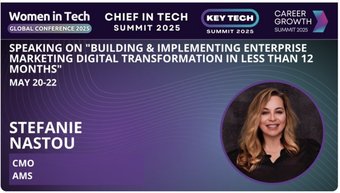
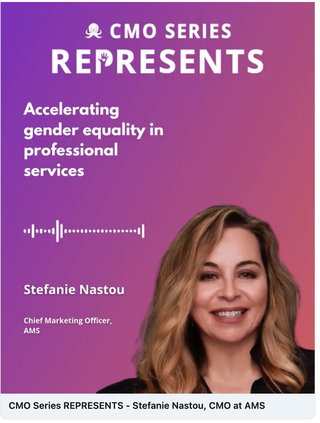

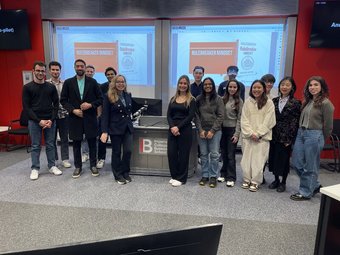
The RuleBreaker Mindset
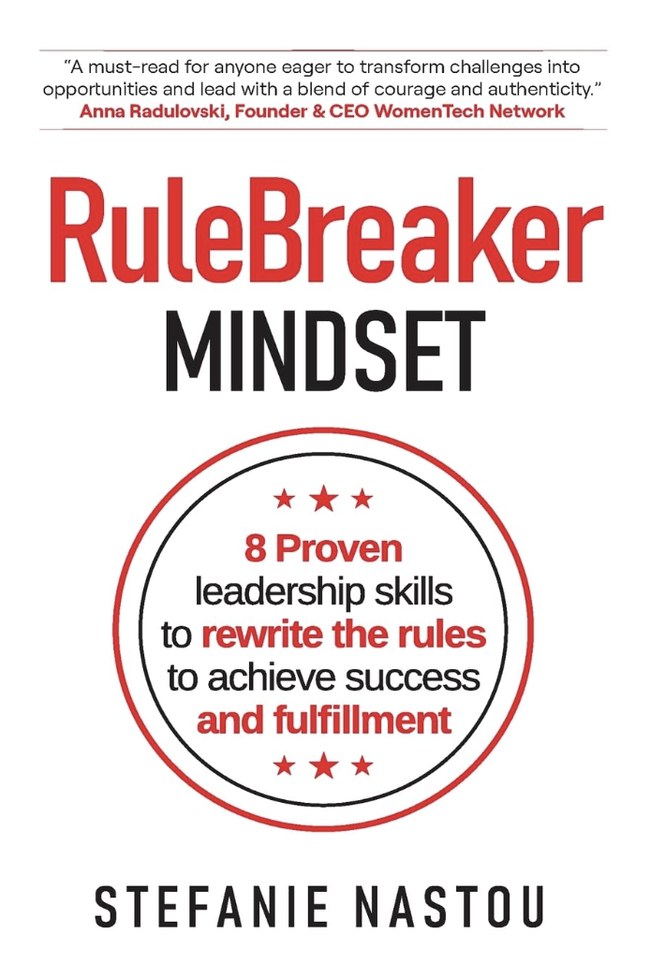
Eight leadership skills, one per chapter — plus a free quiz.
Twelve honest yes/no questions score you against the eight skills the book is built around. Any "no" points you straight to the chapter worth revisiting — then there's a printable workbook to put it into practice.
Fractional CMO for founders & PE-backed portfolio companies
What does a fractional CMO do for a PE-backed portfolio company?
A fractional CMO steps in as senior marketing leadership on a part-time basis — building the demand generation engine, sharpening positioning, and putting board-ready reporting in place, without the cost or ramp-up time of a full-time hire.
How is a fractional CMO different from a full-time CMO or an agency?
An agency executes tactics. A fractional CMO sets the strategy, owns accountability for outcomes, and manages the agencies and internal team executing it — the same scope as a full-time CMO, compressed into focused, high-leverage hours each month.
How fast can a fractional CMO show results inside a hold period?
Strategy and quick wins typically start in the first few weeks, with measurable momentum in the months that follow — important when a hold period is compressed and the board wants to see the growth plan working, not just written down.
What size or stage companies benefit most?
Founder-led and PE-backed B2B companies that have outgrown ad hoc marketing but aren't ready for — or don't need — a full-time CMO yet. That's often the gap between a Series B raise and pre-exit positioning.
Do you work directly with operating partners and boards, or just the internal team?
Both. Reporting is built to be board-ready from day one — the same language and metrics an operating partner needs, not just internal marketing KPIs.
What's the difference between "fractional" and "interim" CMO?
Fractional is an ongoing, part-time role — a few dedicated days or hours each month for as long as it's useful. Interim is typically a full-time, temporary bridge while a permanent CMO is hired. Most engagements here are fractional: sustained, not a stopgap.